Brands spend months getting a fabric right. They run wash tests, approve lab dips, review shrinkage reports. Then the garment goes into production and six months later the returns start coming in because the neckline has lost its shape.
The fabric passes every test. The stitching holds. The problem is the tape behind the collar, and it is the last component anyone thought to specify carefully.
This is what we see consistently across garment categories. Neck tape gets treated as a trim decision rather than a structural one. A buyer picks a width, picks a colour, and moves on. The tape gets sourced from wherever is cheapest or most convenient. Nobody checks whether the tape’s shrinkage behaviour matches the fabric it is going into. Nobody confirms whether the construction is right for the stretch profile of the garment. The neckline holds its shape off the production line, passes inspection, and then fails in the wash.
By the time the complaints come in, the garment is already in the market.
What Necktape Actually Does to a Neckline
The neckline is the most structurally exposed part of a knitted garment. The cut around a crew neck or polo collar sits on or near the bias of the fabric, which means the raw edge stretches. A sewn collar or rib attachment introduces tension at that seam. Every time the garment goes over a head, that tension is applied again.
A neck tape for T-shirts sits inside the neckline seam, between the collar attachment and the garment body. Its job is to distribute that stress along the length of the seam rather than allow it to concentrate at individual stitch points. Without it, repeated wear and washing gradually pulls the seam apart from within. The collar starts to gape. The fabric behind it begins to pucker or curl. The neckline shape the brand signed off in development no longer exists in the garment the customer is wearing.
Garment neck tape prevents this by acting as a structural backing to the seam. It limits how far the seam can stretch in any single direction, stabilises the attachment between collar and body, and determines whether the neckline holds its designed shape across the garment’s full wear life.
The tape is doing load-bearing work. It needs to be specified like a load-bearing component.
Skin Contact Performance: The Comfort Dimension of Collar Tape
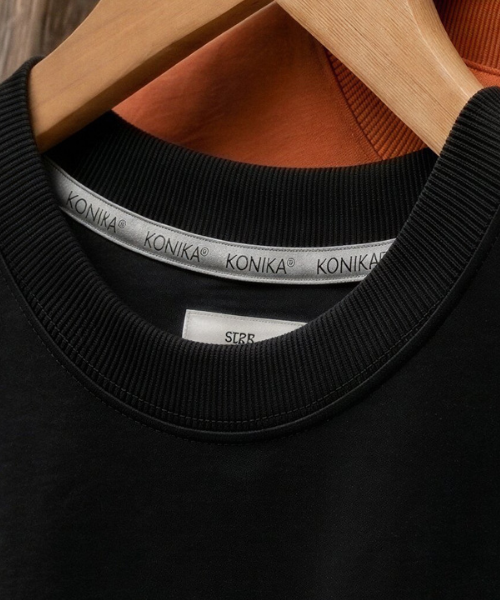
A neck tape sits directly against the back of the wearer’s neck. On a T-shirt worn through a full day, or an activewear top worn through physical exertion, that contact point matters more than any other trim in the garment.
The structural function of garment neck tape is understood by most production teams. The comfort function gets less attention, and this is where the wrong tape specification produces complaints that are harder to trace than a visible neckline distortion. A tape that is too stiff or too heavy will chafe. A tape with a rough surface finish, or one where the edge has been cut rather than folded, creates a raw contact point at the back of the neck that the wearer feels immediately.
The material composition of the tape determines its hand feel against skin. Polyester filament tapes are dimensionally stable and wash well, but at lower yarn grades the surface can feel coarser against skin than a cotton-blend or spun polyester alternative. Nylon-based tapes have a naturally smoother surface and drape differently against the neck than polyester equivalents of the same construction. For activewear, where the tape is in contact with skin during perspiration, the surface texture and weight of the tape per linear metre both affect wear comfort at the neckline.
Width affects comfort directly. A tape that extends beyond the seam allowance into the open fabric of the garment interior creates a hard edge that the wearer can feel. On lightweight fabrics specifically, this edge can print through to the outer face. Specifying width correctly relative to the seam allowance is as much a comfort decision as a structural one.
The edge finish of the tape matters on garments where the tape edge will contact skin. A folded edge produces a softer contact point than a cut edge. On knitted collar tape where the edge is naturally finished by the construction, this is built in. On woven tapes, the edge treatment is a specification decision that should be confirmed at the development stage rather than left to the manufacturer’s default.
The Shrinkage Problem Nobody Accounts For
Fabric shrinkage gets documented at the development stage. Collar shrinkage gets documented. Neckline tape shrinkage almost never does, and this is where most post-wash neckline distortion originates.
When a garment washes for the first time, everything responds to heat and water. The body fabric shrinks to its tested dimension. The collar shrinks to its tested dimension. If the collar tape shrinks at a different rate than either of them, it pulls. A tape that shrinks more than the surrounding fabric draws the neckline inward and creates a tight, puckered collar. A tape that shrinks less holds its original dimension while the fabric draws back around it, which forces the neckline to spread and lose its shape.
The shrinkage differential between tape and fabric is the mechanism. It is why two garments can use identical fabric and identical collar construction and produce completely different neckline results based solely on the tape specification.
Pre-shrunk neckline tape removes the variable. When the tape has been processed to eliminate residual shrinkage before it reaches the production line, its wash behaviour is stable and predictable from the first cycle to the last. The production team knows what the tape will do in the wash because the tape has already done it. There is no first-wash surprise, no progressive degradation of neckline shape over the garment’s life in the wardrobe.
T shirt neck tape that carries residual shrinkage is a quality problem that the production team ships without knowing it. It passes every pre-wash inspection. It fails exactly when the customer is wearing it.
Construction Type Determines Performance
The three construction types used in necktape production each perform differently, and selecting the wrong one for a garment category is as consequential as selecting the wrong shrinkage specification.
Woven collar tape has minimal stretch along its length. It holds the neckline seam in a fixed position and resists any lateral migration of the collar. This is the correct construction for polo shirts, structured jersey tops, and garments where the collar shape is meant to stay precisely where it was sewn. On a polo, where the collar attachment seam runs along a longer line and the collar itself is a structured component, woven tape keeps the attachment seam flat and prevents the collar from bunching or rolling at the neckline.
Knitted collar tape stretches with the garment. It accommodates the natural movement of knitted jersey fabrics and allows the neckline to extend over the head cleanly without fighting the collar attachment. For crew-neck T-shirts in cotton, modal, or bamboo blends, knitted garment neck tape allows the neckline to stretch and recover without placing stress on the seam. For activewear specifically, where garment stretch is a performance requirement rather than just a functional feature, knitted tape is the construction that works with the fabric rather than against it.
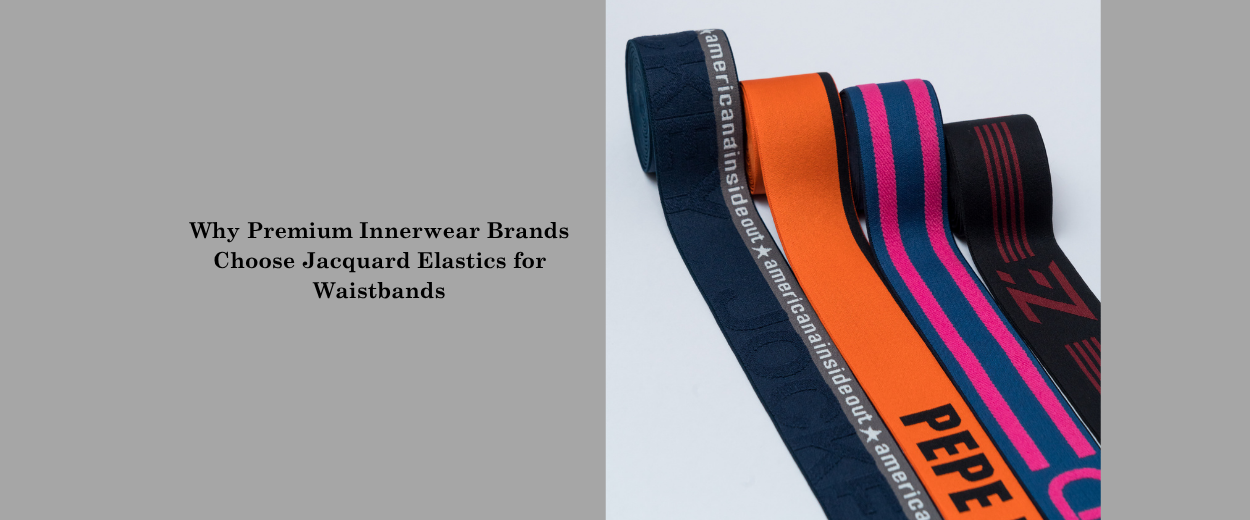
Jacquard neck tape adds branding to the structural function. The brand mark or pattern is woven into the tape structure during manufacture rather than applied to the surface afterwards. The result is a tape where the logo or graphic is permanent, part of the fabric itself. It does not peel at the edges after washing. It does not fade unevenly as surface prints do. For brands where the inside neckline is a visible brand element, jacquard construction gives it a finish that survives the garment’s full commercial life.
Printed neck tape handles the cases jacquard cannot. When the design requires photographic detail, complex colour gradients, or fine typography at a scale that jacquard weaving cannot reproduce, printing onto a woven or knitted base tape is the production method. Printed garment neck tape works for seasonal branding, limited-run product lines, and brand identities where the graphic complexity exceeds what a woven construction can achieve. Wash durability depends on the print process and ink system used, which is why this should be confirmed during development rather than assumed.
Where Activewear Gets This Wrong Most Often
Activewear is the garment category where neck tape specification failures are most visible, because the conditions that activewear puts a garment through are more extreme than standard knitwear.
Moisture management fabrics, which dominate activewear construction, are predominantly polyester or nylon based. These fabrics have higher inherent stretch than cotton jersey. They cycle repeatedly through wet and dry states during normal use. They often go through higher-temperature wash cycles. And they are worn against the skin during physical activity, which means any discomfort at the neckline, including a tape that is too heavy or too stiff, is immediately noticeable.
A collar tape specified for a cotton T-shirt range will frequently be wrong for an activewear application. The stretch profile does not match. The weight may be excessive for a lightweight technical fabric. The tape’s wash performance under repeated high-temperature cycles may have never been tested.
The correct specification for activewear neckline tape typically runs narrower and lighter than for standard knitwear, uses a knitted construction to match the fabric’s stretch profile, and has been pre-shrunk to handle repeated wash cycles without progressive dimensional change. The material should be compatible with the base fabric in terms of heat response, because a tape and fabric that behave differently under the temperatures a sports garment experiences during washing will produce distortion over time even if the initial specification looked correct.
Width matters more in activewear than in other categories. On a 150gsm polyester interlock, a tape that is even marginally too wide will create a visible line on the outer face of the garment. Getting the width right requires knowing the fabric weight, the collar attachment seam width, and the garment’s intended wear position.
Application Methods and What They Mean for Your Production Line
The structural performance of a neckline tape depends on how it is attached to the garment, and the attachment method has direct implications for production line setup, cost per unit, and the tape specification itself.
Coverstitch application is the most widely used method in volume T-shirt and casualwear production. The tape is placed over the neckline seam and sewn down with a coverstitch machine, producing a visible parallel stitch line on the outer face of the collar. This method works across construction types and is compatible with all tape materials. The tape width needs to be confirmed against the seam allowance and the intended stitch position. Coverstitch application is the lowest-barrier method for most garment factories and produces a consistent, durable attachment.
Bonded or heat-seal application attaches the tape to the seam using a thermoplastic adhesive rather than thread. The tape is pressed onto the seam under heat and pressure, producing an attachment with no visible stitch line on the outer face. This is the correct method for seamless or minimalist construction aesthetics, and for activewear designs where external stitch lines at the neckline create unwanted texture or drag. The adhesive chemistry needs to be matched to both the tape material and the base fabric. Bonded application requires specific pressing equipment at the garment factory and a tape that has been manufactured to accept bonding rather than sewn attachment.
Printed tagless construction uses the neck tape to replace the sewn care label entirely. The size, care instructions, and brand information are printed directly onto the tape surface, and the tape is sewn or bonded into the neckline in the standard position. The result is a completely label-free interior — no thread tails, no woven label edge against the skin. For brands where a tagless interior is a product feature, the tape specification needs to accommodate the required print area, and the print durability through wash cycles needs to be confirmed during development. Printed neckline tape for tagless construction is a different specification from decorative printed tape.
Confirming the application method at the start of the development process determines what tape construction, width, and finish are viable. Changing the application method after the tape has been sampled and approved adds a round of development that could have been avoided.
What to Confirm Before Specifying Necktape
The questions that prevent the most quality problems in neckline tape specification are almost always the ones that do not get asked at the sourcing stage.
Fabric composition and stretch percentage. The tape construction needs to match the fabric’s behaviour under tension. Providing this at the start of the development conversation allows the manufacturer to select the right base construction before sampling begins.
Wash conditions. Domestic wash at 30 degrees produces a different tape performance requirement than industrial laundry at 60 degrees. Pre-shrunk tape handles both, but confirming the intended wash conditions allows the tape to be tested under representative conditions before bulk production.
Collar attachment method. Whether the tape is sewn in or bonded affects the required dimensions and the tape’s structural specification. A bonded tape needs the adhesive chemistry matched to both the tape and the base fabric. A sewn tape needs the width and edge finish confirmed against the seam allowance.
Branding requirement. For jacquard tape, provide the logo file and confirm the colour specification. For printed neck tape, confirm the colour range and the number of print sides required.
Width and weight. On lightweight fabrics, state the maximum acceptable weight per linear metre. Specify the width that fits the neckline seam without excess bulk visible from the outer face.
Certification requirements. If the end market or retailer requires Oeko-Tex or GRS certification, confirm this at the sourcing stage so the tape is drawn from a certified production batch.
Every one of these points can be resolved in a single development conversation. Leaving any of them to assumption is the mechanism through which most neckline quality problems enter production.
How Konika Approaches Neck Tape
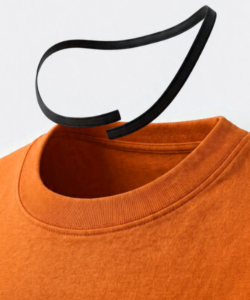
Konika manufactures neck tapes across woven, knitted, jacquard, and printed constructions. Widths and material specifications are developed to the garment’s requirements rather than pulled from a fixed catalogue, because the correct specification varies by fabric type, garment category, and the neckline construction method the production team is using.
All tapes Konika produces are pre-shrunk. This applies to neck tapes as much as to the broader range of elastic bands for bra applications, sports bra under bands, bra straps, and jacquard elastics the facility produces. Pre-shrinking is a production-stage treatment, so by the time the tape reaches the garment manufacturer, the residual shrinkage that causes post-wash neckline distortion has already been eliminated.
Every tape is tested in Konika’s in-house laboratory before dispatch. For neck tapes, the testing covers shrinkage, washing fastness, colour fastness, sublimation, elongation, and physical dimensions. Samples sent to clients are lab-checked before they leave the facility, which means the sample a garment technologist evaluates is production-representative, not a hand-finished one-off that does not reflect bulk performance.
The in-house dyeing facility, the largest narrow fabric dyeing facility in India, handles colour matching within the same site where the tape is manufactured. For printed and coloured collar tapes, this means batch-to-batch colour consistency is controlled internally rather than dependent on a third-party dyer’s process. Clients working to tight colour specifications get colour accuracy that is verifiable against the lab record at the production facility.
Konika holds Oeko-Tex and GRS certifications, which covers the tape range for brands supplying markets or retail partners where these certifications are a procurement requirement.
Brands and garment manufacturers working on new neck tape specifications, or reviewing a current tape that is producing quality complaints, can work directly with Konika’s technical team to develop a specification matched to the garment’s construction and performance requirements.
Necktape Across the Production Volume Spectrum
The specification decisions covered above apply at every production volume, but the practical considerations change depending on whether a brand is running tens of thousands of units per month or hundreds of thousands.
At lower production volumes, flexibility in MOQ matters. A tape manufacturer that requires large minimum order quantities to set up a custom width or a jacquard construction effectively forces smaller brands into standard widths and plain constructions that may not be right for the garment. The result is a brand either compromising on the tape specification or holding more inventory than their production volume requires.
At higher production volumes, batch-to-batch consistency becomes the primary concern. Colour consistency across dye lots, dimensional consistency across production runs, and shrinkage consistency from order to order determine whether the tape remains a stable, approved component or becomes a source of variance in the garment’s quality audit results.
Both situations require different things from the tape manufacturer. Consistent quality with controlled shrinkage, colour accuracy maintained through in-house dyeing, and the ability to develop custom specifications without imposing impractical minimum orders are the practical requirements that determine whether a tape manufacturer works for a brand’s actual production situation.
Neckline distortion is a specification problem. It is solved at the development stage, before bulk production begins, by matching the tape’s construction, shrinkage behaviour, stretch profile, and width to the garment it is going into.
The tape is the last component most brands think carefully about. It is usually the first one that shows up in their quality complaints.
Frequently Asked Questions About Necktape
What is necktape in garment manufacturing?
Necktape is a narrow strip of fabric sewn or bonded along the inside of a garment’s neckline seam, between the collar attachment and the body fabric. It stabilises the neckline seam against stretching, reinforces the collar attachment, covers raw seam edges that would otherwise contact the wearer’s skin, and provides a surface for brand marking or care labelling. It is used across T-shirts, polos, activewear, and knitwear where the neckline seam is under repeated stress from wear and washing.
What is the difference between collar tape and necktape?
Collar tape and necktape refer to the same component. Both describe the narrow reinforcing tape applied to the inside of a garment’s neckline seam. The terms are used interchangeably across garment manufacturing, with “collar tape” more common in woven garment production and “necktape” or “neck tape” more widely used in knitwear and activewear manufacturing. The construction, material, and function are identical regardless of which term a production team uses.
Why does my garment neckline distort after washing?
Neckline distortion after washing is most commonly caused by a shrinkage mismatch between the neck tape and the garment fabric. When the tape shrinks at a different rate than the fabric it is attached to, it pulls the neckline out of its intended shape. A tape that shrinks more than the fabric draws the collar inward and creates puckering. A tape that shrinks less holds its dimension while the fabric draws back around it, causing the neckline to spread. Using pre-shrunk neckline tape eliminates this differential because the tape’s dimensional behaviour has already been stabilised before it reaches the production line.
What width of neck tape should I use for T-shirts?
For standard crew-neck T-shirts, neck tape width typically runs between 12mm and 20mm, depending on the seam allowance of the neckline construction and the fabric weight. The tape should cover the full seam allowance with a small margin on each side. On lightweight fabrics below 160gsm, a tape that extends too far beyond the seam allowance will create a hard edge that is visible on the outer face of the garment. The correct width is confirmed by sewing a sample onto the actual garment fabric and checking the result both flat and on a body form.
What is printed neck tape used for?
Printed neck tape carries brand marks, care instructions, size information, or graphic designs applied to the surface of a woven or knitted base tape. It is used in two main ways: as a decorative branding element at the inside neckline, and as a tagless label replacement where the care and size information is printed directly onto the tape, eliminating the need for a separate sewn-in label. Printed garment neck tape is suited to designs with fine detail, multiple colours, or complex typography that jacquard weaving cannot reproduce at the required scale.
What is the difference between woven and knitted necktape?
Woven necktape has minimal stretch along its length and holds the neckline seam in a fixed position. It is the correct choice for structured garments including polos, uniforms, and woven shell garments where the collar shape needs to stay precisely where it was sewn. Knitted necktape has inherent stretch that allows it to move with the garment fabric. It is suited to jersey T-shirts and activewear where the neckline needs to extend during wear and recover its shape afterwards. Using woven tape on a high-stretch knitted garment places stress on the seam and can cause the tape to detach or the collar to distort under tension.
Does necktape need to be pre-shrunk?
Pre-shrunk neck tape is the correct specification for any garment that will go through washing. Tape that carries residual shrinkage will shrink at a different rate from the garment fabric in the first wash cycle, creating a dimensional mismatch that pulls the neckline out of shape. Pre-shrunk tape has had this residual shrinkage removed before manufacture, so its behaviour through subsequent wash cycles is stable and predictable. This is particularly important for activewear and garments washed at higher temperatures, where the differential between an untreated tape and the base fabric is more pronounced.
Can necktape be used as a brand label?
Yes. Necktape is a standard location for brand marking in T-shirt and activewear manufacturing. The tape can carry a woven brand mark through jacquard construction, where the logo or pattern is built into the tape structure during weaving, or a printed mark applied to the tape surface. Jacquard construction produces a permanent brand element that does not fade or peel. Printed neck tape allows greater design complexity and colour range. When the tape is used as a tagless label replacement, it carries care and size information in addition to brand marks, eliminating the separate sewn-in label from the garment interior entirely.
What is garment neck tape made from?
Garment neck tape is manufactured from polyester, nylon, cotton, or blended yarns depending on the performance requirements of the garment. Polyester is the most common base material for volume production because of its dimensional stability, colour fastness, and wash durability. Nylon produces a smoother surface against skin and is used where comfort at the neckline contact point is a priority. Blended constructions combine the properties of each fibre. For brands with sustainability requirements, recycled polyester tape manufactured to GRS certification standards is available as an alternative to virgin polyester.